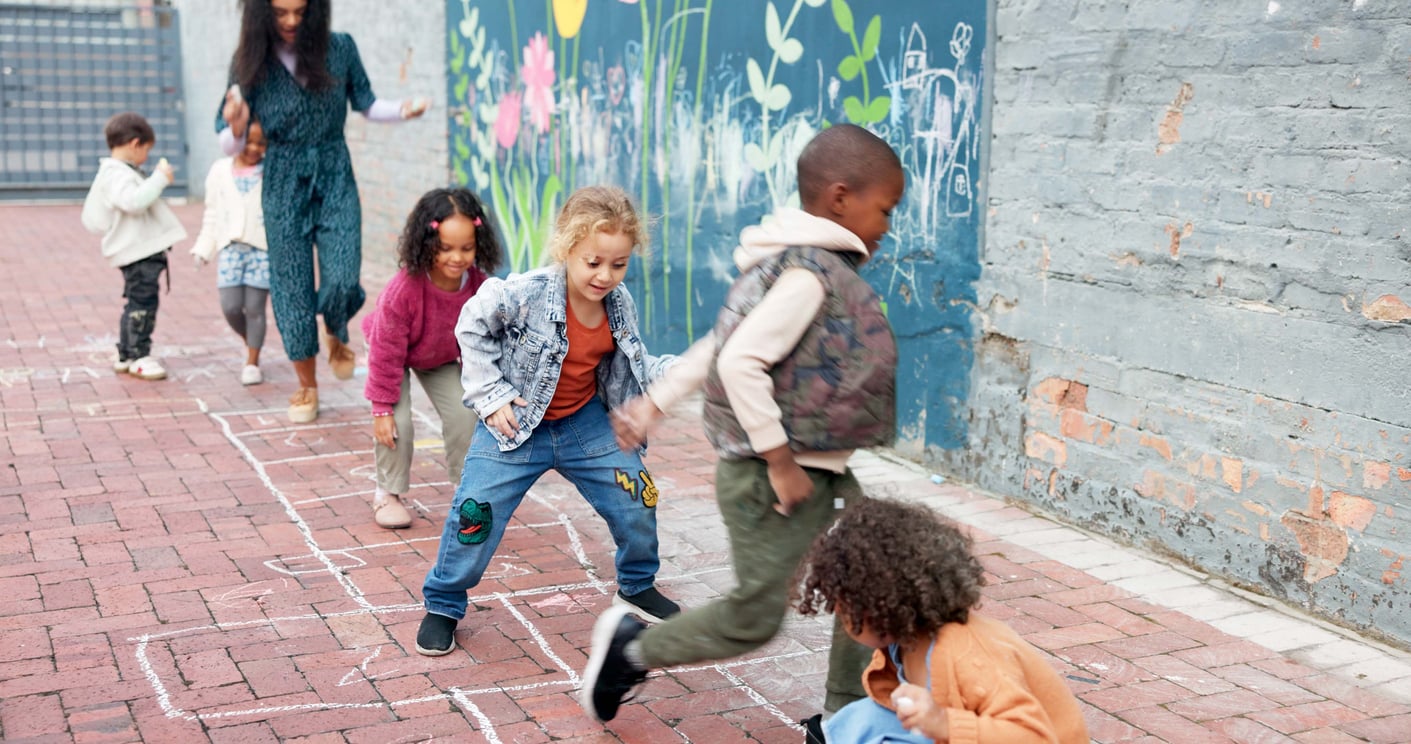
The conference is a space for sharing what actually works to promote safety and well-being in families, however complex their challenges. I was especially delighted with a session called “Play Changes the Brain: Healing and Resilience for Families,” in which the presenter emphasized, “Neuroplasticity = Hope!” As an AFT national trainer on student trauma, I am passionate about sharing trauma-informed practices through professional learning in my school district because the ripple effect of this content impacts educators, students, families and community. The session spoke to the importance of play: Even 15 minutes of play each day can have an impact on child development. It further made me think how often play is now reduced or even eliminated in many of our schools. Why? We know that play:
- Boosts a child’s health and development.
- Reduces stress and improves social and emotional resilience.
- Creates positive memories for both parent and child.
- Builds partnerships with families and promotes engagement.
- Encourages parental empathy and nurturing care.
- Boosts parental confidence and ease with parenting.
Play is a crucial part of learning for children and families. It teaches problem-solving, creativity, teamwork, negotiation, empathy, managing feelings, and fine and gross motor skills, to name a few. I started to wonder: "Our students need more and more support in these skills; is this linked to the reduction of play in schools?”
The session also highlighted that play can sometimes be challenging for adults due to societal pressure to be productive, overwhelming responsibilities, and lack of time or energy. Adults often think that play must be complex or big planned events, when in fact it can be singing, storytelling, drawing or exploring household objects like pans or containers in a cupboard.
As educators, we can normalize the adult struggle with play and share our insights on play with families, including ideas of play at different developmental ages. Parents have different strengths and may not have the same knowledge of play as educators.
Let's share what we know with families to promote play, even for 15 minutes a day. Legislators are increasingly trying to support play with formal policy. As educators, we can make play a part of learning in school and at home. I want to share some examples and resources aimed at helping you be more playful with students, thereby promoting healing and resilience!
One of my favorite things to do with my middle school students was to incorporate play through content. As a Spanish teacher, I incorporated play through cultural crafts and vocabulary activities. For example, students followed directions in Spanish and placed household items in a house replica to assess house and directional vocabulary. After we learned weather vocabulary, students used role play to practice weather forecasting in Spanish. In my classroom, play also looked like brain teasers, “Would you rather … ?” conversations and guessing activities. Sometimes, I showed a partial photo or an enlarged picture and challenged students to work together on what they thought it might be. Further, our play was sometimes physical: During a quick game of “mum ball,” students would sit on their desks (middle schoolers love this) and simply toss around a ball in silence; if the ball was dropped or you talked, you were out (only the mum of the ball was to be heard) 🙂. We would play until we had two participants remaining. This was a quick way to have students reset.
These activities included several building blocks of play, including creativity, collaboration, physical and social emotional growth. To help families use the same building blocks and connect with school, I would communicate what we were doing in class, share links to brain teasers and encourage families to be partners in projects or the at-home audience for their students' presentations.
You can find great resources on Share My Lesson to promote play at all stages—for school settings or to send home. Here are some of my favorites: